
Learn How to Predict Global Conflicts and Geopolitical Events
Geopolitical forecasting uses data, early warning indicators, and prediction markets to estimate the probability of global conflicts. Understand how analysts track tensions and assess risk.
Trending Global Conflicts
Regions analysts are watching for conflict probability.
Israel–Iran Tensions
Regional escalation risk and diplomatic strain.
China–Taiwan
Cross-strait military and political dynamics.
Russia–NATO
Eastern European security and alliance posture.
Pakistan–Afghanistan
Border security and regional instability.
Pakistan–India
Kashmir and historical tensions.
Global Conflict Risk Map
Regional risk levels used in geopolitical forecasting.
Early Warning Signals
Indicators analysts monitor to assess conflict probability.
Military buildup
Troop movements, exercises, mobilization.
Economic sanctions
Trade restrictions, financial pressure.
Diplomatic tensions
Rhetoric, breakdowns, expulsions.
Strategic alliances
Security pacts, alliance shifts.
Prediction Market Insights
How forecasting platforms estimate geopolitical event probability.
Prediction markets let participants trade on the outcome of future events. Prices reflect the collective probability that an event will occur—such as conflict escalation or a diplomatic agreement. As news breaks, participants update their views and prices shift, providing a real-time view of how informed observers assess geopolitical risk.
Prediction markets explained →Conflict escalation (next 6mo)
Implied probability
Diplomatic agreement
Implied probability
Military incident
Implied probability
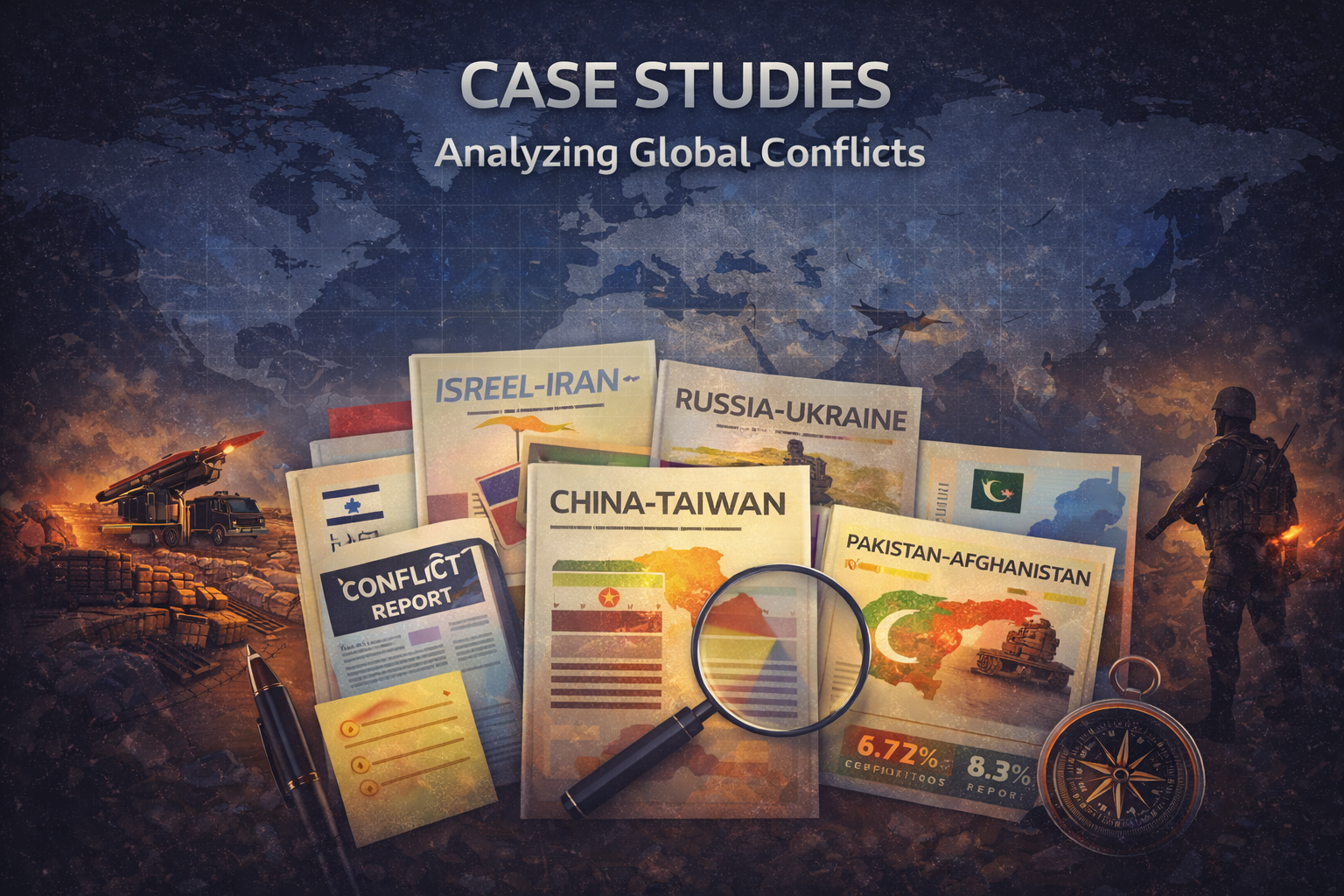
Deep Geopolitical Analysis
In-depth editorial and case studies.
Latest Geopolitical Forecasts
Recent analysis on global tensions and conflict probability.
10 Early Warning Signs of War Between Countries
Analysts monitor a set of recurring indicators that often appear before international conflicts escalate. Learn the key early warning signs of war between countries.
Read more →Military Buildup Indicators That Often Appear Before War
Troop deployments, exercises, and defense spending are among the strongest signals analysts use to assess conflict probability. Learn which military buildup indicators often appear before war.
Read more →Global Conflict Risk Index: Countries Most Likely to Face Conflict
A structured view of geopolitical risk by region. Which countries and regions analysts rank as most likely to face conflict, and what drives those assessments.
Read more →How Prediction Markets Forecast Wars
Prediction markets let participants trade on the probability of future events, including conflict. How they work, what they capture, and how analysts use them alongside other tools.
Read more →Geopolitical Insights
Subscribe for analysis on global conflict risk, prediction markets, and geopolitical forecasting.